
An Introduction to the Right to Roam Movement with Nadia Shaikh
A blog summarising UK Youth For Nature's recent webinar, by Ramandeep Nijjar
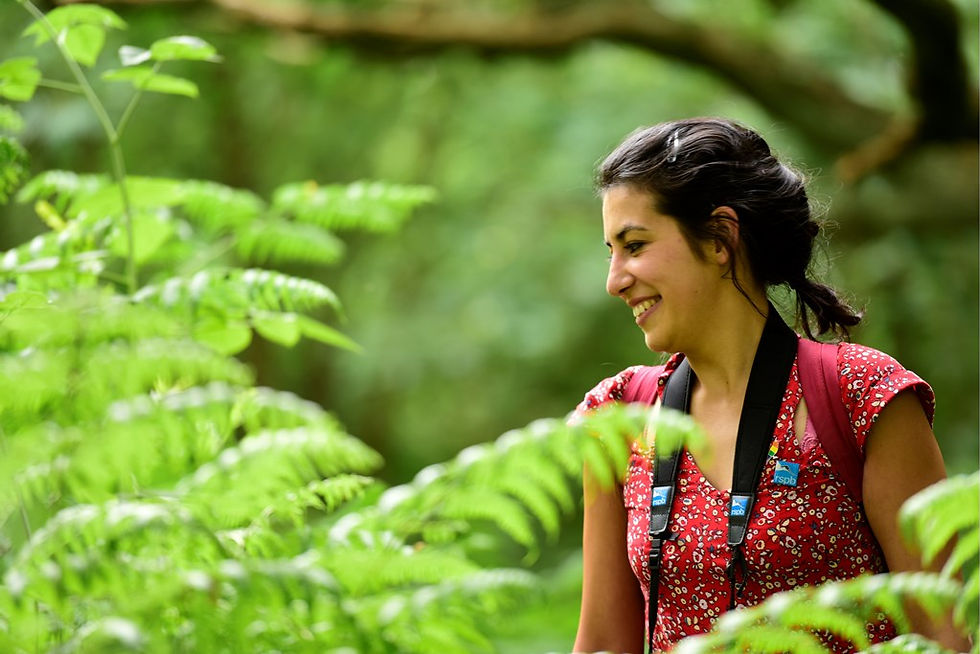
Nadia Shaikh's Background
A naturalist and conservationist, Nadia has devoted her life to repairing our relationship with nature. After 14 years in nature conservation, she joined Right to Roam in 2021 convinced that mainstream 'nature protection' wasn't involving people in a meaningful way.
Nadia also leads the Raven Network, a group for people of colour who work in the nature and conservation sector. They look at how to decolonise nature conservation in the UK.
Social and Environmental Ecology
To begin the talk, Nadia told us how she has always been keen to better understand the ecology all around us. In 2019-2020, her questions on race equity relation to the conversation sector inspired a significant career change and a deepening of her knowledge on these systemic issues.
As she delved deeper, two questions came to mind:
Working for RSPB, the biggest nature conservation charity in Europe, she considered - How can we as an organisation be growing in land owning and wealth but nature still be in decline?
In the sector, there’s a fixation on collecting more scientific data on well-known ecological threats (habitat loss, pollution, etc) - Why was no one willing to tackle the systematic issues of why nature is always under threat in this country?
When working in the nature conservation sector, she felt there was a sense of misanthropy, even in discussions about nature connection and equity, diversity and inclusion. It is the systems that we live in that dictate our well of life and govern our culture. Nature is being damaged because of a culmination of many systems, such as white supremacy and patriarchy, not the individual person.
For example, the National Trust has begun to look at colonial legacies of their properties, as many of the estate's wealth were connected to colonialism and historic slavery.
An Introduction to the Right to Roam Movement
Since 2021, Right to Roam has been organising peaceful trespasses into some of the vast areas of countryside from which the public are currently excluded. It was started when co-founder Nick Hayes learnt that 92% of England’s land is inaccessible. Scotland has had the Scottish Outdoor Access Code since 2003, allowing the right to roam, while in England 92% is inaccessible so currently only have the right to roam on just 8%.
This inequity opened his eyes to the deeply problematic set of laws that underpin our land system. The book “Wild Service’ explores the philosophies and the principles behind the campaign and how we humans can live intertwined with the landscapes. The book's central thesis is that people can act as guardians of nature if we are allowed to access and care for it.
Trespass as Protest
Trespass has been a historical method of civil disobedience. The Kinder Scout Mass Trespass of 1932 saw 500 working class people from the factories in Manchester and Sheffield fight for the right to spend their Sunday in the fresh air of the Peak District.
Trespassing is only a civil offence, between you and the landowner, and only becomes a criminal offence if you refuse to leave when asked to. Right to Roam have local groups that organise local trespasses and events across the UK, and also teach about land history and land form.
Q&A with Nadia
How can we best co-exist with nature?
Everyone will be in service and called in different ways. Just start small as we need to see the value that as we are living in highly complex systems. Do not overcomplicate it, you do not need to be perfect to make a difference and remember to love everyone around you. You could take local responsibility, restore a local pond, plant some wildflowers, if we do not see the value of small, then it defeats the purpose of wanting to build a relationship with our local land and wildlife.
Have you had any particular memorable moments when roaming?
I have never had a serious incident about being told to get off the land, all the trespasses I have been part of have been joyous. They have all been centered about joy, peace and care. There was only one trespass before I joined where the police came, but most of the time you are just out enjoying nature and wildlife with others around you. It is just lovely to meet others from your community and gather together.
Would you encourage people to trespass on their own on local walks etc, or stick to the organised trespasses that you run?
It depends on you as a person but I would recommend that you need to get to know about the nature that is on our doorstep and the nature that is closest to us. You need to know the local wildlife, who owns what land, what the farming activities are. Learn to connect and love what is on your doorstep so you can then observe and take action for it, you will also have expanded your horizons. If more people did it, it would then become normalised and it would be more likely to be legitimised and put into law in England. However, if you are a woman or a person of colour you may feel more fearful, so you can go in a group.
Think of trespass as either local disobedience and for protest so the local press and your MP needs to be informed so it can be a storytelling example. Otherwise, it can be more personal to embolden yourself so you build confidence and overcome fear, so you feel increased agency. Knowledge of the world around you is often more about belonging in a space rather than documentation. Allowing more of us to be changemakers into the future.
How should young people be involved with Right to Roam?
Local groups will have lots of different ways to get involved, you can then go on local events and trespasses. There will also be various tasks you can get involved with if you wish such as social media.
Get equipped with land ownership history and land justice such as Guy Shrubsole’s new book ‘The Lie of the Land.’ Also some of the staff are looking to step down, so there might be some career opportunities.
Ten tools for land justice | The Lead - Good information resource.
How to use the arts and creativity in your movement?
Creativity is often a response to what has happened to us historically. Communities that have been protesters in the past such as civil rights, women’s right to vote, workers rights, have been most directly affected by what they are protesting for.
Three important parts of any movement: 1. Taking down a current institution that is not working for the people. 2. Imagine an alternative future and be able to name it. 3. Signature of historical movements, art and creativity is often the heart of them. As well as music, food and community. Humans respond creatively naturally as a way to build community, solidarity and joy but also as a response to trauma.
When England was colonised, people just lived in their local communities, understood local stories, cultures but also understanding of difference. This led to more homogenisation of people, which led to people being less creative. However, creativity is a useful response to what has happened historically so we need to bring back artists, creatives and storytellers.
Do you or the team ever get involved with part of food growing access part of land justice?
We are part of a bigger land justice movement called ‘Shared assets,’ so we work with lots of different aspects of the land justice movement. We are just quite small but do a lot and are very active and visible. However, our primary focus is nature connection but we work alongside others who focus specifically on other areas. As a small organisation, we are specifically focused on pushing forward one specific form of legislation.
What is next and what can we look our for in Right to Roam and in your personal work?
All of us leading the movement do not want to be leading it too long as it is important to recognise when you need to step aside and allow someone new with new perspectives and ideas.
We now have a new Prime Minister so a new big year of connecting with the new cabinet members. We do have a number of MPs that support our movement but need to continuously build more relationships behind the scenes. Some big Trespasses planned for the rest of the year, you will be able to find more details and more actions in the newsletter. Before the end of this Labour government there may be an access paper which will be focused on access to nature so we will need as many members of the public to respond to it.
The RAVEN Network, is always open for new members, it is a peer support network for any people of colour who work in the area of nature conservation.


Comments